Domestic Coastal Tourism in 2025
| Coastal Tourism in England | Coastal Tourism in Great Britain |
|
Generated £5.8bn domestic tourism spend
9.1m overnight visits, 55.6m day visits Visits -18% since 2024 and -32% since 2022 |
Generated £7.0bn
domestic tourism spend
10.9m overnight visits, 66.1m day visits |
Source: GBTS and GBDVS 2025

The Coast comprises a very high rate of SMEs (with less than 3% corporate brands represented)
Visitor Profile demographics:
| % of total seaside trips | |
| 16-34 | 34% |
| 35-54 | 37% |
| 55+ | 29% |
64% of trips did not include children and 36% of trips did include children in the travel party.
47% of overnight visitors stayed in Serviced accommodation, 21% stayed in a caravan, camping or glamping site, 15% in a commercial property rental and 14% in a private home.
The average length of stay at the seaside for domestic overnight visitors was 4.3 nights. The average spend is £82 per night and £47 for a day visit.
Source: GBTS and GBDVS 2025
Key challenges facing coastal communities:
Coastal communities are facing a structural decline in domestic visitor numbers to the coast (-32% since 2022) and international visitors have not returned to pre-covid levels.
Seasonality remains a key issue for the coastal visitor economy impacting on:
- Productivity
- Investment
- Perceptions (consumers, media and government)
Climate Change – coastal storms / flooding
Business ownership and investment - Large number of micro and small businesses – difficult to coordinate and deliver change
High dependency on Tourism average 15-20% of employment - but 50%+ in places like St. Ives, Exmoor, Whitby and Newquay
Socio-economic pressures on Coastal Communities
But there are opportunities:
Growing awareness and interest in our coast through England's Coast brand to attract new audiences to our coast all year round
Addressing seasonality and attracting off peak growth markets
- International visitors
- Domestic visitors - Wellness, Slow tourism, Business Events, Under 35s, Empty nesters (over 55s) and Active Experiences
Wider sector or coastal opportunities…
- King Charles III England Coast Path
International visitors to the coast:
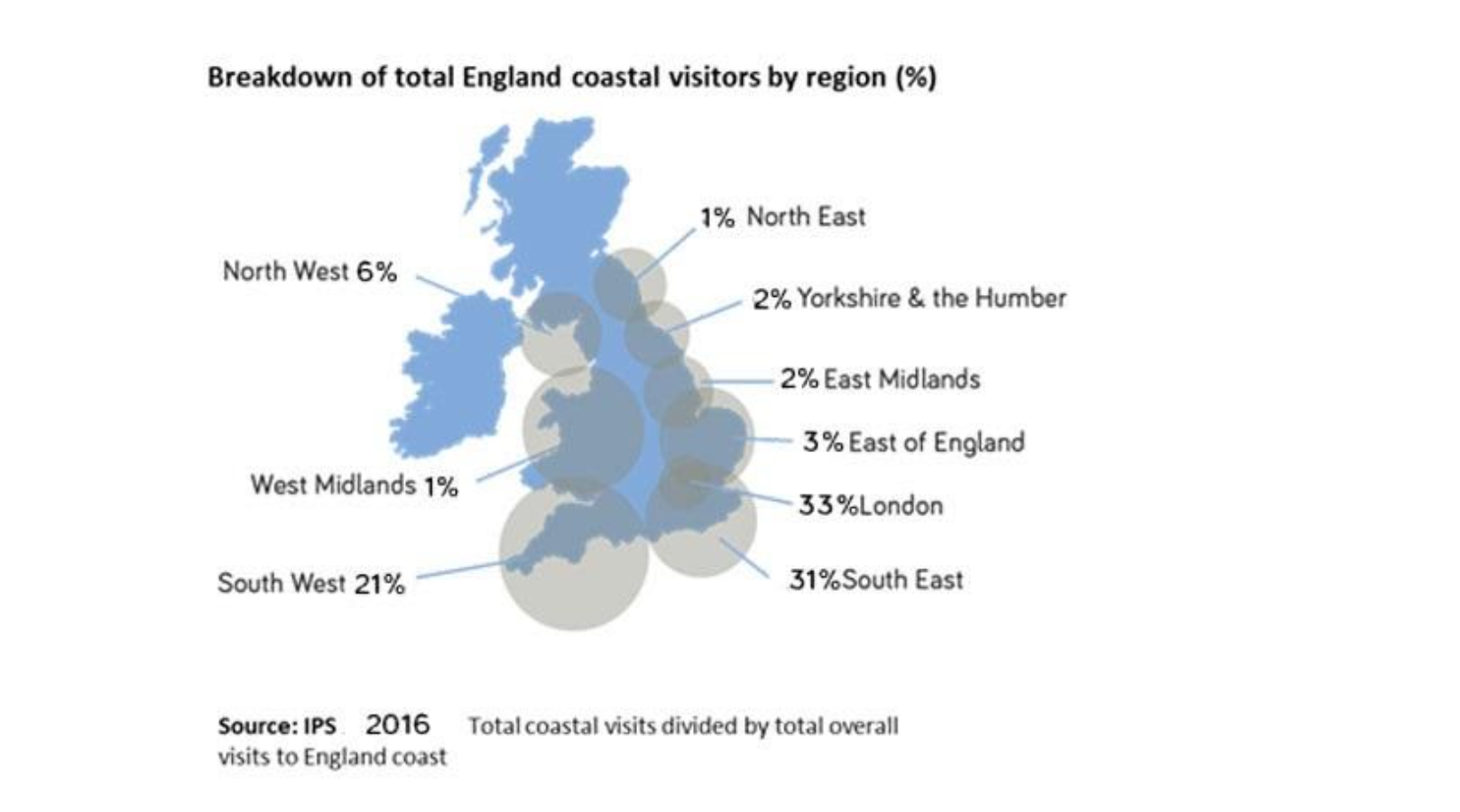
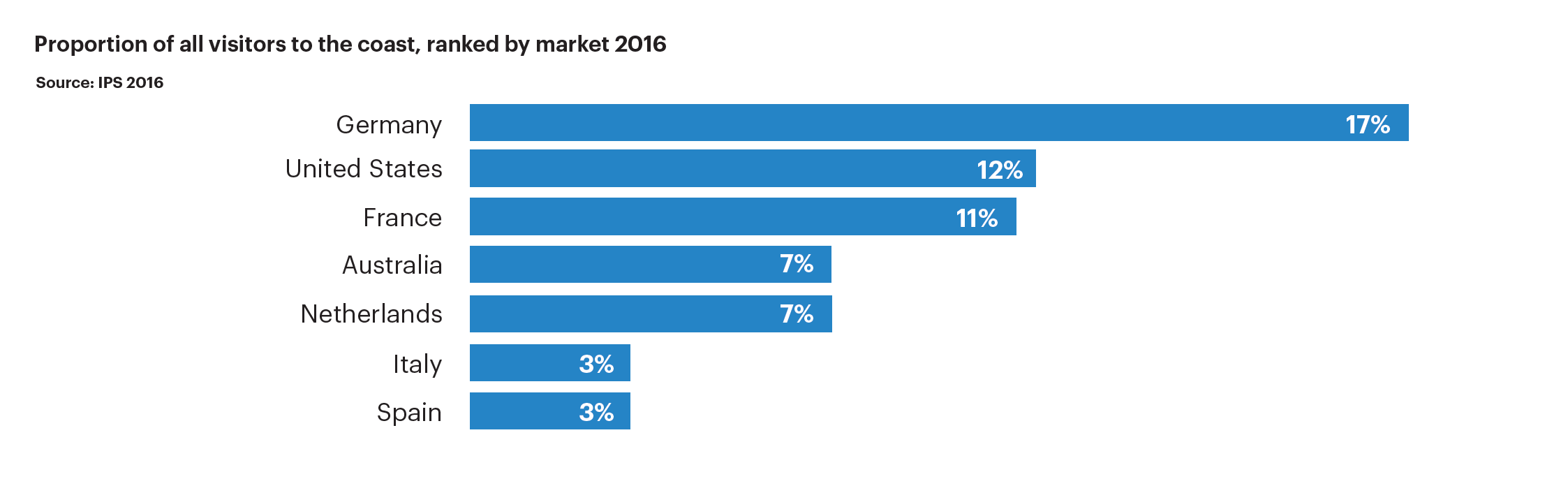
The last published data on International Visitors to the Coast was undertaken as part of the International Passenger Survey (IPS) in 2016. Whilst this data is now 10 years old it provides an insight into the nature and appeal of the coast to International Visitors.
In 2016:
10% visit the English coast at some point during their stay in UK
88% are on break of 4+ nights (non coastal visitors = 55% on 4+ night break)
Employment
The last detailed study of employment in the visitor economy at the Coast was undertaken in 2014. More recent studies have revealed that places such as Whitby, Exmoor and Newquay have more than 50% of their local economy reliant on the visitor economy and the average for coastal towns is between 15-20% of all employment in tourism and hospitality.
210,000 jobs worth £3.6bn (Sheffield Hallam University 2014) + 1% growth
Higher than average concentration of SMEs in coastal visitor economy with a low level of corporate brands (National Coastal Tourism Academy)
15-20% of employment in coastal towns is attributed to the visitor economy
Pre-covid-19:
Whilst the data is not directly comparable due to methodological changes in the national surveys - the below data provides a snapshot of the coastal tourism economy prior to Covid-19
|
Coastal Tourism in England:
|
Coastal Tourism in Great Britain:
|